
Clowne Christadelphian Ecclesia
WELCOME

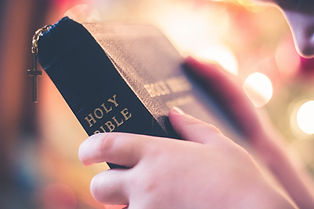
Beginings and Endings
January 2026
Imagine what it would be like if you could tell the future. You could make the right financial investments, perhaps avoid particular health problems, and always be in the right place at the right time. But in reality nobody knows what will happen in the next few minutes, let alone in the next few years. God can declare “the end from the beginning and from ancient times things not yet done.” (Isaiah 46:10). He knows what is going to happen, while those in power in the various governments have no idea. It might seem that God is not involved in what is happening in the world, because so many things have gone wrong. But the Bible tells us that He has a plan and it is not going to fail, unlike the plans made by humans. “Listen to me, you stubborn of heart, you who are far from righteousness”, He says. “I bring near my righteousness; it is not far off, and my salvation will not delay; I will put salvation in Zion, for Israel my glory”. These words in the prophecy of Isaiah were written at a time when Israel had forsaken their God. They were going to be taken captive by other nations. In fact, before they had been taken away, God told them how they would be brought back to their land. He even told them the name of the king who would allow them to return – Cyrus, king of Persia. (Isaiah 44 & 45). That vision of the future would have seemed completely unrealistic when the prophet Isaiah told people about it. They just couldn’t look ahead that far. God has given us prophecies about what will happen in the time leading up to the return of the Lord Jesus to the earth. Jesus himself warned that the days before his return would be very troubled. He described a world where people would be “eating and drinking, marrying and giving in marriage”, just as it had been before the flood in Noah’s time. Many people try to distract themselves from the terrible things that are going on by focusing on food, drink and relationships. Others don’t have that option, because life is so hard. When Jesus was teaching his disciples, he warned them of the destruction of the temple in Jerusalem (which happened in AD70), but told them “when you hear of wars and tumults, do not be terrified, for these things must first take place, but the end will not be at once”. He told them to get out of Jerusalem before it was destroyed, and when it happened there were some who remembered and took heed to his words. The warnings he gave for our generation are just as reliable. “… watch yourselves lest your hearts be weighed down with dissipation and drunkenness and cares of this life, and that day come upon you suddenly like a trap. For it will come upon all who dwell on the face of the whole earth”. (Luke 21:34,35). The Kingdom of God is near and it is time to get ready. God wants us to know about it, so let’s find out as much as we can while there is still time.


Putting Christ back into Christmas
December 2025
It is that time of year again, when, however much we want to, we cannot escape Christmas. The songs on the radio, adverts for Christmas goods, and the list goes on. Do you think of Christmas as a time to enjoy getting together with family and friends? Or is it an excusable time of over indulgence in food, drink and gifts? Sadly, for some it’s a time of dread, of loneliness with no friends or family to share the time with, or of unaffordable expense. Is this all Christmas is about, or is there something else? The churches see Christmas as a celebration of the birth of Jesus Christ. Whilst there is strong evidence that Jesus was born around September rather than in December, and that Christianity relabelled the pagan feast of Saturnalia as a celebration of the birth of Jesus, surely it cannot be wrong to spend a while thinking about what the birth of Jesus means. In the gospel of Luke, we read of the message of the angel Gabriel to Mary, where she was told that she would have a son and call his name Jesus. He would inherit the throne of his ancestor King David and would reign for ever. The Old Testament prophet Isaiah, speaking of the Lord Jesus, says, “Of the increase of his government and of peace there will be no end, on the throne of David and over his kingdom, to establish it and to uphold it with justice and with righteousness from this time forth and forevermore …” (Isaiah 9:7 ESV). In the world in which we live, peace seems unachievable. The Bible tells us that the world will be in turmoil when God decides to intervene in man’s affairs once more by sending Jesus back to the earth to set up an everlasting kingdom, fulfilling Old Testament prophecies and the words of the angel to Mary. So, at this season, let us pause for a short while and put Christ back into Christmas and consider how his birth fulfilled the words of the prophets, and open our Bibles and see how his work is to be completed, and how we may become citizens of that eternal kingdom. Clowne Christadelphians invite you to join us on Sundays at 5.00 pm at our hall on Creswell Road, to open the Bible and hear about Gods plan and purpose for this world, and the wonderful offer that he has made to each one of us.


What is the Gospel
November 2025
What is the Gospel? It’s a well-known word, used to describe something that can be trusted, for example, “Take it as gospel…” Perhaps the word makes you think of a style of music, or the first four books of the New Testament in the Bible, which are called the four gospels. What does the word gospel mean? It’s from the Greek euangelion, which means “good news”. The first time we come across it in the Bible is in the book of Matthew 4:23, describing what Jesus did: “he went throughout all Galilee, teaching in their synagogues and proclaiming the gospel of the kingdom…” In fact, the phrase “the gospel of the kingdom” is mentioned twice more in Matthew. It’s also described elsewhere in the Bible as “the gospel of God” and “the gospel of Jesus Christ”. Although it’s a word that only appears in the New Testament, it is mentioned in relation to an Old Testament character. Galatians 3:8 describes how the gospel was preached to Abraham, who lived many years before the birth of Jesus. So what was this “good news”? We don’t hear much good news these days, and it was the same in Israel when Jesus was there. They were under Roman occupation, and although they were allowed to continue worshipping their God, they were in a very vulnerable position. Many of them were looking for a Messiah, a King who would come and restore their kingdom, because the Old Testament prophets had foretold this. When Jesus began teaching the gospel of the kingdom of God, it attracted a lot of attention. The Jewish religious leaders saw him as a threat, because they were in a comfortable position. But ordinary people flocked to Jesus because he could heal disease and his teaching made sense. He didn’t ask them for money and he really cared about them. However, some struggled to commit themselves and eventually stopped following him. He asked his closest disciples, “Do you want to go away as well?” (John 6:67). Peter replied, “Lord, to whom shall we go? You have the words of eternal life”. So Peter understood the good news. Jesus was teaching about eternal life in God’s kingdom. The Old Testament prophets had foretold that Jesus would come as King, but the disciples didn’t want to accept that he would have to die first. He would not be King in Jerusalem during their lifetime. But, like Abraham, they had heard the gospel and believed it, so they could look forward to a time when Jesus will come back to the earth as King and raise the dead. The same gospel is still there for us to learn about, over 2,000 years later. Now that is good news!


The Bible as History
October 2025
Written over a period of 1500 years, the Bible gives a history of events since the world began. It focuses on Israel as a land and as a nation. The city of Jerusalem is at the heart of historical events in the Bible. It first appears in Genesis, the first book of the Bible. Abram was a man to whom God promised the land of Canaan, as it was called at that time. He had travelled to Canaan from Ur of the Chaldees, in the area of southern Iraq, leaving behind most of his family and a comfortable lifestyle. Why? Genesis 12:1 tells us,”Now the LORD said to Abram, ‘Go forth from your country, and from your relatives and from your father’s house, to the land which I will show you”. So Abram (later called Abraham) had been leading a nomadic existence in the land of Canaan with his wife, servants, flocks and herds for some years when he went on a rescue mission to save his nephew and family from an invading army. As he travelled back, King Melchizedek of “Salem” came out to meet Abram. He is described in Genesis 14:18 as “priest of God most high”. So we see that long before Israel became a nation, there was a priest of God in the land, reigning over Jerusalem. Current excavations in Jerusalem have revealed a structure that archaeologists believe to be the “temple of Melchizedek”, although this building is not mentioned in the Bible. The Psalms and New Testament also mention Melchizedek. He was a priest long before the nation of Israel existed and we are told in Hebrews 6:20 that the Lord Jesus Christ is “a high priest for ever after the order of Melchizedek”. To be a high priest forever is not possible if you are going to die. Because Jesus rose from the dead and has eternal life, he is able to fulfil that role. Why is this relevant to us? Melchizedek and Abraham lived thousands of years ago. In Galatians 3:9, we are told that “those who are of faith are blessed along with Abraham, the man of faith”. We don’t need to be descended from Abraham to inherit the promises God gave to him. In Genesis 12:2-3, God promised “I will make of you a great nation, and I will bless you and make your name great, so that you will be a blessing. I will bless those who bless you and him who dishonours you I will curse, and in you all families of the earth shall be blessed.” There are further promises about a descendant of Abraham who will cause those blessings on all families of the earth to happen. Galatians 3:16 confirms that this descendant is Jesus: “Now the promises were made to Abraham and to his offspring…who is Christ”. The history of Abraham’s descendants continues right through the Old Testament. In the New Testament, Jesus showed himself to be the descendant of Abraham who would become a king/priest like Melchizedek. The Bible tells us about a series of empires leading up to the kingdom of God on earth. At the moment, the world is ruled by a mix of weak and strong nations as foretold in Daniel 2:43. The prophecy also says, “In the days of these kings, the God of heaven will set up a kingdom that shall never be destroyed…” The kingdom of God will be centred on Jerusalem, but will fill the whole earth. Those who have faith in God will be blessed, as was promised to Abraham all those years ago. Would you like to find out more about being blessed with Abraham?


The Bible - word of God or word of man?
September 2025
It’s a simple question that divides opinion: Is the Bible the divinely inspired word of God, or the writings of men? The criticisms made of the Bible fall generally into three general themes: • It’s an old book and has no relevance to life today. • It’s a work of fiction and the events described didn’t really happen. • It’s an old book that has been copied many times and as a result errors have been introduced into the text.
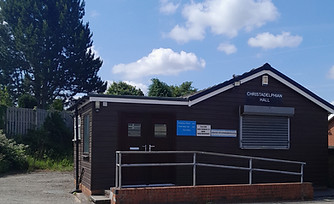
The Christadelphians in Clowne hold a Bible-based talk at 5.00pm each Sunday. Come and explore the Bible message with us and see how this message remains unchanged and is both important and relevant today.
Christadelphian Hall,
Creswell Road, Clowne S43 4LS.
See the 'What's on' page for details.
Contact us to request a free Bible Reading Course and/or booklet
"The Miracle of the Bible" and these will be posted to you free of charge
OR read them online by clicking on the links below: